Keypads, remotes and storm-damaged boards make up most of the opener calls here, along with a steady run of older units whose parts are getting hard to find. The technician sorts out which it is, fixes what's fixable on the visit, and tells you plainly when replacing the opener makes more sense. The estimate is free.
Tell us what the door is doing. Nothing begins until you've heard the number, and hearing it is free.
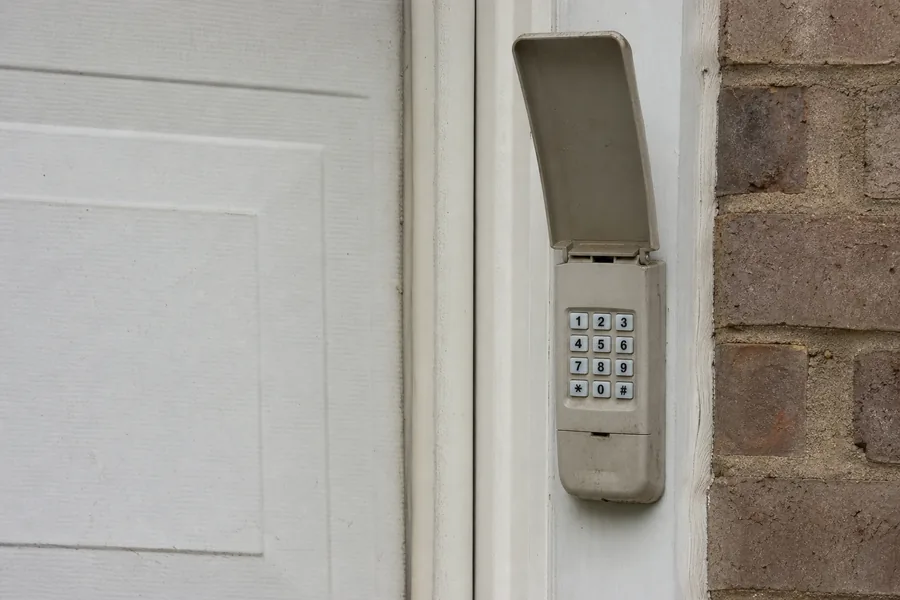
An outdoor keypad lives through humid summers and ice storms on the door frame, and moisture is its enemy. A keypad that ignores some presses, works only after a few tries, or has gone completely dark usually has a weak battery or corroded contacts behind the cover. Sometimes the opener has simply lost the keypad's pairing after a power cut. An opener with an app also lets you check the door's status from the house; see smart garage door openers.
A new battery, a cleaned or replaced keypad, and a fresh pairing with a new code settle most of these in minutes. If the opener has stopped listening to every device at once, the problem is in its receiver or circuit board, and that's the next thing checked.
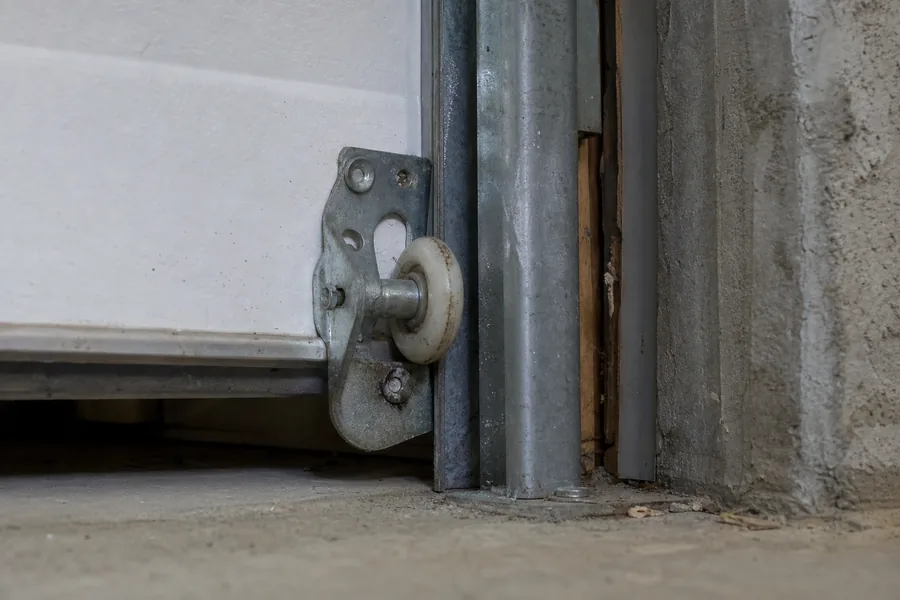
Some houses built in the nineties still run Wayne Dalton openers, or early models from other makers whose parts are now hard to get. Those can often be kept running with the parts still made, such as safety eyes, remotes and some boards. When the part needed no longer exists, you hear that directly, along with what a current opener brings: rolling-code security, quieter running, and battery backup.
Openers that mount on the wall next to the door and drive the spring tube directly belong in this group too. They're repairable when parts exist, and replaceable with a current wall-mounted unit when they don't.
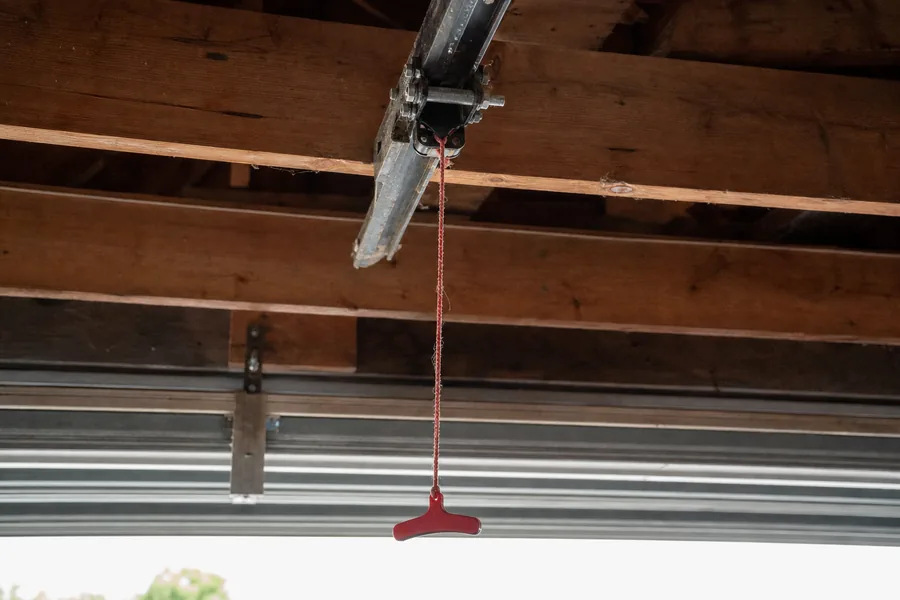
Out toward the edge of the county, plenty of houses sit well back from the road, and people want the door opening as they turn in, not when they're at the bumper. Range depends on the remote's battery, the opener's antenna hanging straight down from the unit, and whatever sits in between. A metal door, a metal building, or one of the brighter LED bulbs screwed into the opener all cut it down.
A fresh battery, a straightened or replaced antenna, a garage-rated bulb and, where needed, an external receiver mounted higher up bring the range back. On shops and detached buildings, a keypad by the walk-in door is often the simpler answer.
Every opener call follows the same five steps.
Thunderstorms roll through often in spring, and each outage ends with a surge when the power returns. The opener's circuit board is what suffers: a dark opener, or one that still answers the wall button but none of the remotes. A replacement board brings it back, and a surge protector on the outlet keeps the next storm from doing the same.
On openers with battery backup, the battery is tested on every visit; a dead backup battery is the reason many doors won't open during an outage.
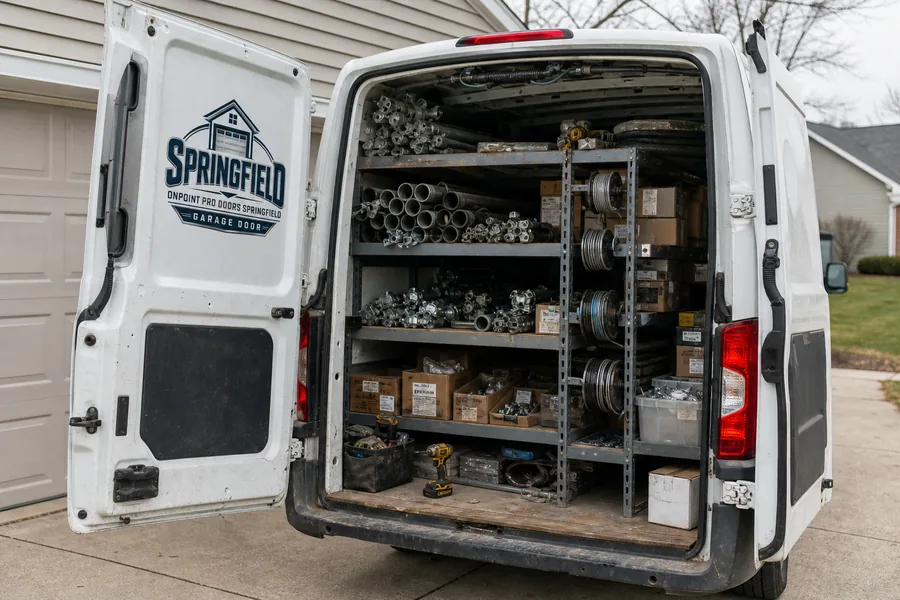
Rountree, Phelps Grove, Galloway, Brentwood, Southern Hills and Doling, plus Nixa, Ozark, Republic, Battlefield, Strafford and Willard. Parts for the common opener brands ride along.
Tell us the street; the window you get is two hours.
When a new opener is the right call, the choice comes down to the garage: a chain drive suits a detached garage or a shop, a belt drive where the garage sits under or beside living space, a wall-mounted unit where the ceiling is crowded. Every install comes with rolling-code remotes, the eyes mounted and aligned, the keypad paired with a new code, and the old unit hauled away.
The door is balanced before the new opener is hung, so it isn't asked to lift weight the springs should be carrying.
Most keypad problems are small. Battery, contacts or pairing.
Old openers aren't always finished. It depends on whether the part still exists.
Range problems have causes. Battery, antenna, bulb or building.
Storm surges hit boards. A surge protector is a small add-on worth having.
Usually a battery or moisture in the contacts. It's cleaned or replaced and paired with a new code on the visit.
Often, if the part still exists. When it doesn't, you hear that plainly, with the new-opener option written out.
Weak battery, a bent antenna, an LED bulb in the opener, or a metal building in the way. Each has a fix.
The circuit board usually took a surge. A new board and a surge protector are the fix.
Yes: chain, belt and wall-mounted units, with the old one hauled away and every remote paired.
Yes. A wireless keypad by the walk-in door, paired to the shop's opener, is a short add-on to any visit, and it spares you hunting for a remote.
Nothing. It's free and written, and the decision is yours.
One call or the form gets you on the schedule: describe what the door's up to and roughly where you are. You'll have a two-hour window and a ring from the technician before arrival.
Free estimates, in town or out in the county.
Describe the fault and we'll give you an honest arrival time. The visit and the estimate is free, anywhere in Greene County.
Easier to explain by phone? Call (417) 216-7189.
Tell us what the door is doing. Nothing begins until you've heard the number, and hearing it is free.