The cables are the part of the door that actually does the lifting, and they fail in a few predictable ways here: slack after a spring breaks, rusted through by humid summers, or thrown off the drum when the door hits something. If one hangs loose, shows broken strands or has come off its drum, leave the door shut and call. The estimate is free.
Tell us what the door is doing. Nothing begins until you've heard the number, and hearing it is free.
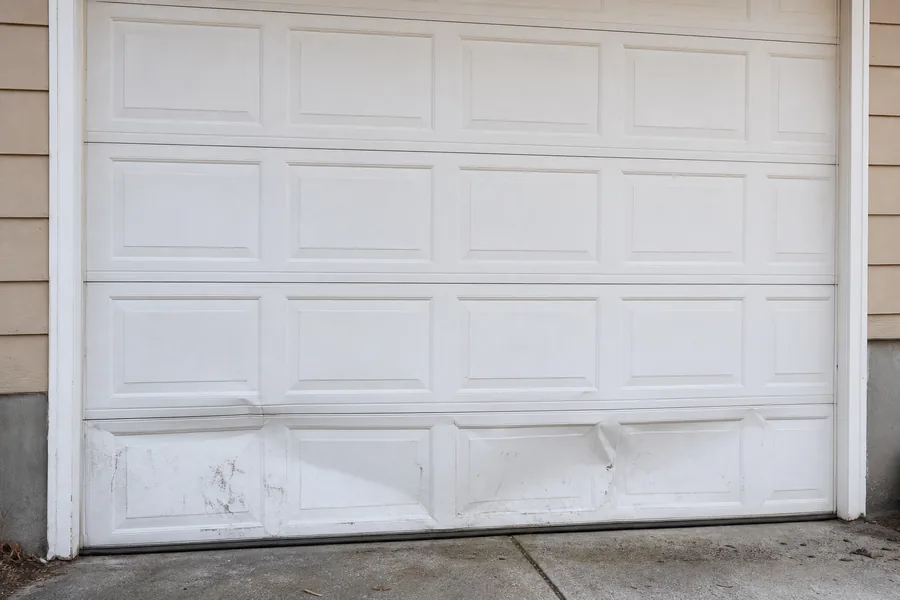
Plenty of doors around town run on a Wayne Dalton TorqueMaster system, where the springs sit inside a steel tube above the door instead of out in the open. The cables still wind onto a drum at each end of that tube. When a spring inside the tube lets go, both cables lose their tension at once, the door drops a few inches and hangs, and the cables often unwind or tangle at the drums. When a trailer or mower bent a section as well as a cable, see garage door panel replacement.
Those doors need the right parts: springs made for the tube and the drums that go with them. The technician knows the system on sight and carries the common sizes, and the cables are rewound and leveled as part of the spring repair rather than left for a second visit.
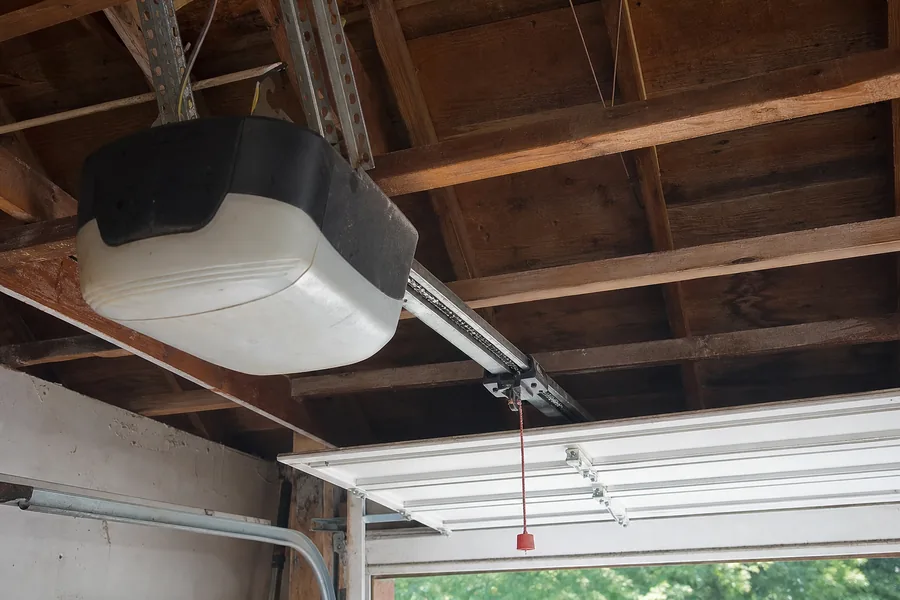
The Ozarks summer keeps a closed garage damp for months, and steel cables rust from the inside out, where you can't see it until strands start breaking at the surface. The bottom few inches, where the cable loops through the bracket on the door, go first, because that's where condensation collects and the bracket's edge rubs.
Galvanized replacement cables resist that far better. When a door here gets new cables, they're galvanized unless the door calls for something heavier. A dehumidifier or a vent in a closed-up garage helps every metal part in it.
On the edges of the county, a lot of driveways are gravel or chip-seal, and the dust they throw up settles into the tracks and the roller bearings. Rollers grinding on grit wear out faster, run louder, and make the door heavier on the cables and the opener. In town the same thing happens more slowly, with road dust and spring pollen.
Sealed-bearing nylon rollers keep the grit out of the bearing, and a clean track makes them last. Every roller on the door is changed together, and the difference in noise is usually obvious the first time the door runs.
Tension first, then everything else.
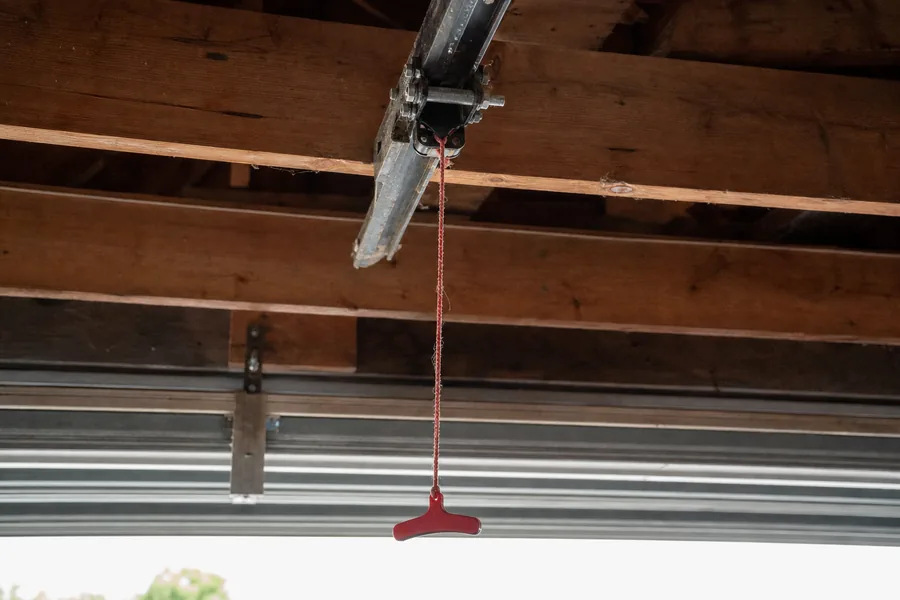
After freezing rain, the bottom of the door can be glued to the slab. If the opener runs anyway, one side often tears loose first, and the cable on the side still frozen goes slack and slips off its drum. It's the most common cable call the morning after an ice storm.
If the door is frozen down, leave the opener off until the ice lets go. If a cable has already come off, don't run the door again; a cable off its drum can take the drum and the shaft with it.
Brick ranches in Southern Hills, Brentwood and Galloway, bungalows with detached garages near Rountree, Phelps Grove and Doling, and out to Nixa, Ozark, Republic, Battlefield, Strafford and Willard, where the shops and outbuildings have doors of their own.
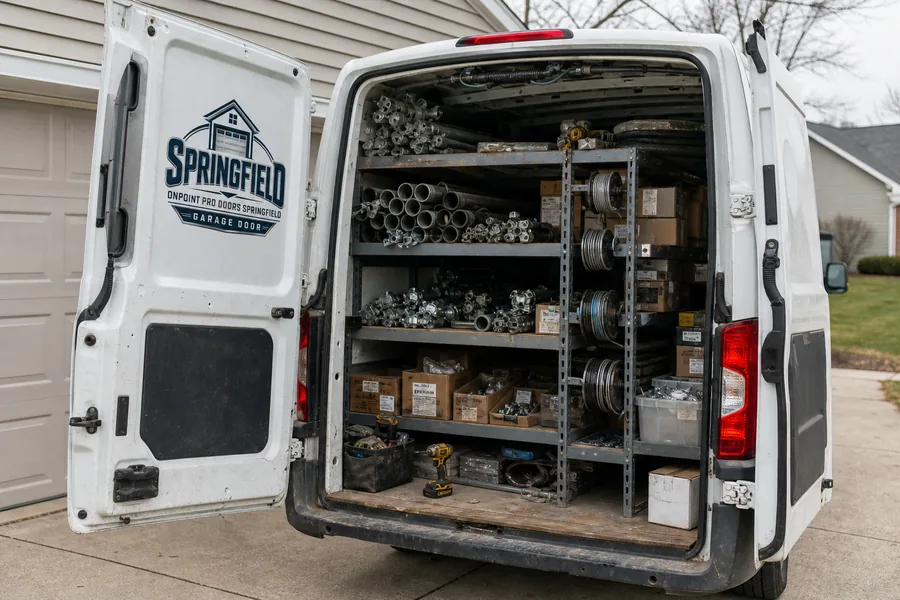
The truck carries cables and drums in the usual sizes.
Always a matched pair. The two sides have to wind the same.
The system identified first. TorqueMaster and open torsion doors take different parts.
Galvanized by default. Humidity is hard on bare steel.
The reason found. A slack or rusted cable has a cause worth fixing.
Drums matched to the system. Tube doors and open-shaft doors use different drums.
The spring inside the tube has most likely broken; both cables lose tension when it does. Keep the door closed and the opener off, and call.
Look without touching: brown staining, broken strands sticking out, or a thinner stretch near the bottom corner. Any of those means it's time.
A cable slipped off its drum when the other side broke free. Leave the door alone and call; it's usually a same-visit repair.
Yes. Outbuilding and shop sectional doors get the same treatment, with heavier cables where the door needs them.
When a spring breaks, the cables usually take a jolt too, and on older doors they're often frayed already. They're checked on every spring job and replaced when they need it.
Worn or gritty bearings, usually. A new set of sealed rollers quiets the door right away.
Yes. A new cable next to an old one winds unevenly and the door ends up crooked.
You're given a two-hour window when you call, and the technician rings on the way.
Yes. You'll see each part listed before anything is replaced.
Describe the door and give us the address; a two-hour slot is set, and the technician calls once rolling.
Free estimate across the county and the towns around it.
Describe the fault and we'll give you an honest arrival time. The visit and the estimate is free, anywhere in Greene County.
Easier to explain by phone? Call (417) 216-7189.
Tell us what the door is doing. Nothing begins until you've heard the number, and hearing it is free.