The emergency we see most here is a door knocked out of its track, often after a car bumped it or a cable let go. Close behind are doors stuck open in a storm and doors frozen shut after freezing rain. Tell us which it is. The door gets made safe before anything else, and the estimate is free.
Tell us what the door is doing. Nothing begins until you've heard the number, and hearing it is free.
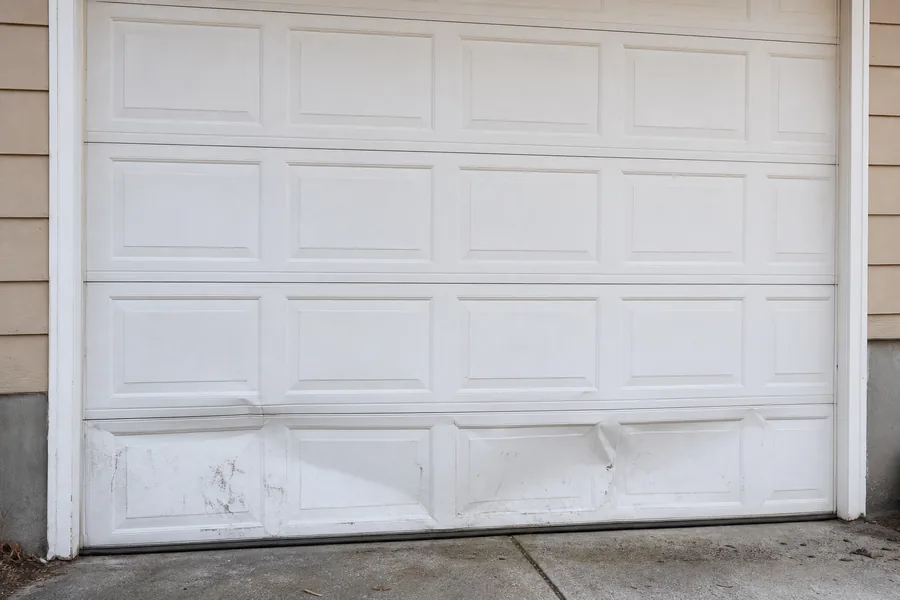
A door leaves its track when a car nudges the bottom section, when a cable snaps and one side drops, or when a roller breaks and the door twists as it moves. Once rollers are out, the door can hang at an angle with its weight on a few hinges, and it can fall. Unplug the opener or stop pressing the button, keep everyone out from under it, and leave it hanging rather than shoving it back.
The technician takes the tension off, supports the door, and works it back into the track, replacing bent track, broken rollers or a snapped cable as needed. The cause gets fixed too, or the door simply comes out again the next time it's used.
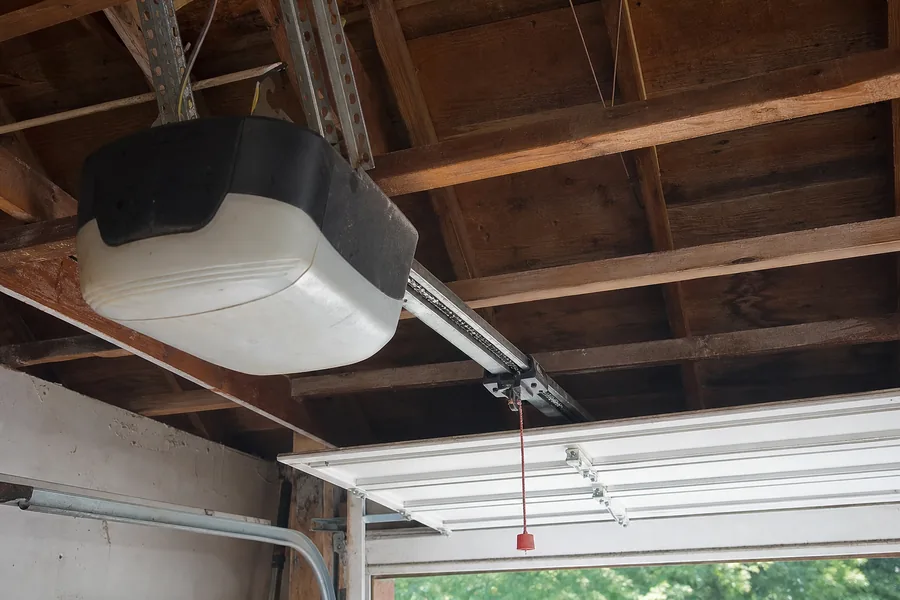
A door that suddenly sits lower on one side has lost lift on that side: a cable jumped its drum or broke, or one of a pair of springs let go. Running the opener on a crooked door drags it further out of line and can bend the track or crack a section. Leave it where it stopped.
On the visit, both cables are replaced if one is frayed, both springs if one broke, and the door is leveled and balanced before it runs again.
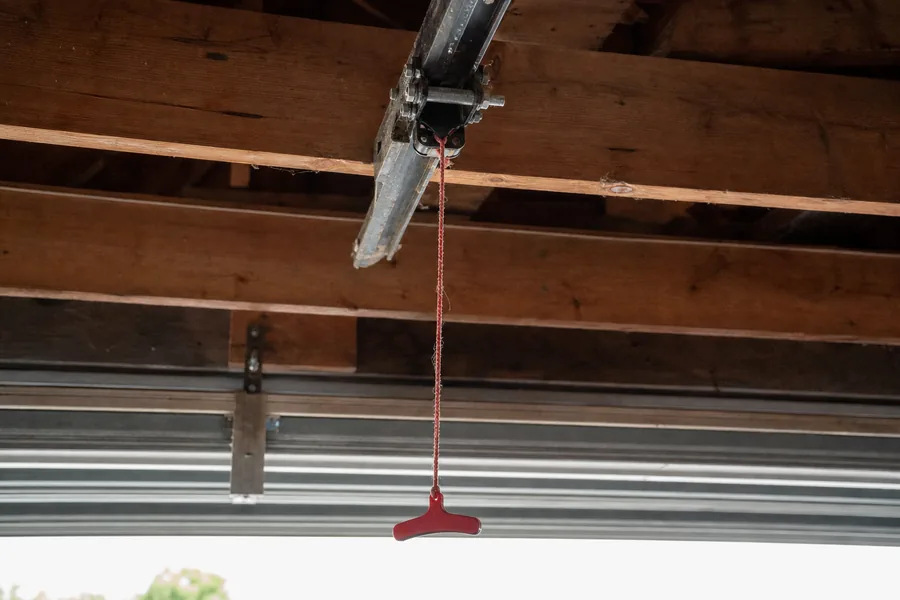
Spring storms bring the stuck-open calls: the power flickers, the opener loses its settings, or wind shoves the door so a roller rides out. A house that can't be closed goes to the top of the schedule, so say so when you call, and lock the inner door in the meantime.
Winter brings the opposite problem, a door glued to the slab by freezing rain. Leave the button alone; forcing a frozen door is how cables and springs get strained. If the car has to get out, call; we free it carefully so the seal survives.
Same order, day or night.
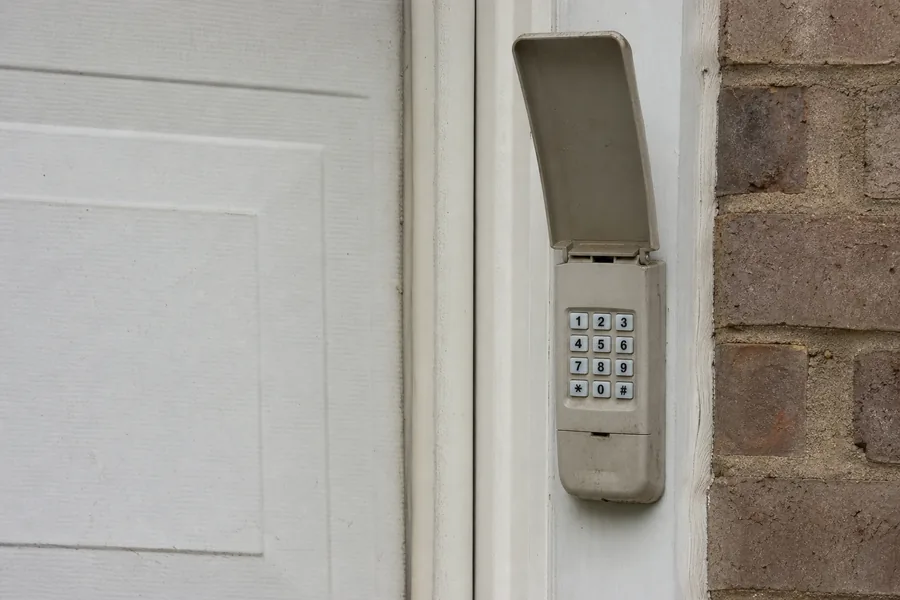
Wood doors and wood-framed openings swell in a humid summer. A door that used to clear the stop molding starts rubbing, then binding, and one evening it stops halfway. That's not a broken opener. The door is freed, the stops are adjusted to give it room, and the opener's force is reset for a door that now moves freely.
Steel doors don't swell, but their rollers and hinges rust in the same humidity, and a seized roller can stop a door just as suddenly.
Three things put most doors out of their track: a bumper touching the bottom section on a tight driveway, a lift cable that frays through at the bottom bracket and lets one side drop, and rollers whose bearings have rusted until they drag instead of turning. The first is bad luck. The second and third give warning, in a frayed strand you can see or a new grinding sound on the way up, and replacing worn rollers and cables before they fail is the easiest emergency there is to avoid.
Past the edge of town, plenty of properties have a detached shop or a metal building with a big sectional or rolling door. When one of those won't close, tools and equipment sit exposed. Those calls are handled like a house that can't be locked: the building is secured first, then the door is fixed on the visit or the part is ordered with the opening closed up in the meantime.
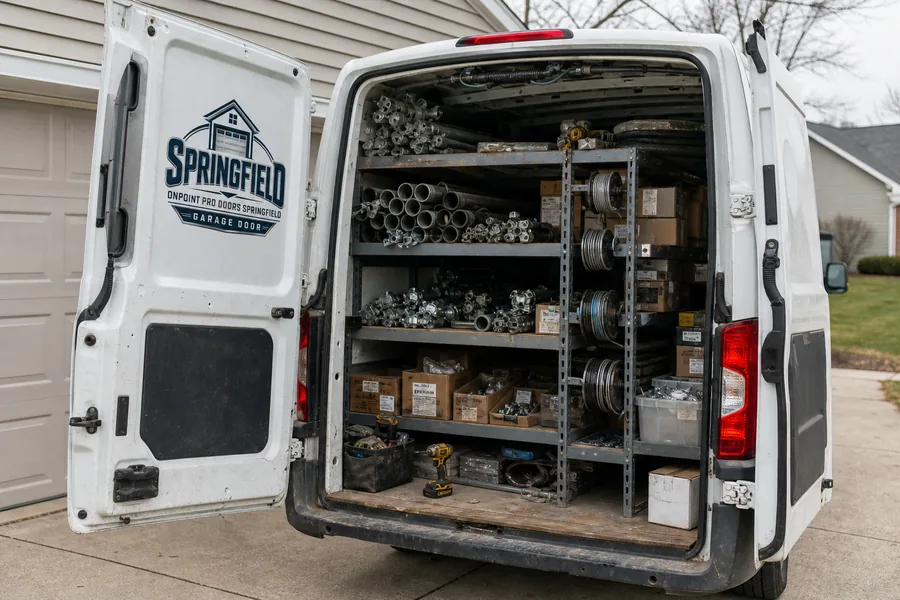
Rountree, Phelps Grove, Galloway, Brentwood, Southern Hills and Doling, and out to Nixa, Ozark, Republic, Battlefield, Strafford and Willard. Springs, cables, rollers, track and opener parts ride on the truck.
Give us your street and what's stuck.
We never shove a door back in. Tension comes off first.
Pairs are replaced as pairs. Cables and springs alike.
Open houses are first. Then trapped cars.
Written estimate at any hour. Free.
Keep clear, unplug the opener, and call. It's supported and worked back in, with the cause fixed so it stays in.
A cable or spring on that side let go. Don't run the opener; it can bend the track.
Lock the inside door and call; open houses are handled before anything else.
Better not. A frayed cable usually lets go within weeks, and when it does the door drops on that side. Replacing both cables is a short job.
Leave the button alone. We free it gently to save the seal, then look at the cables it strained.
Humidity has swollen the door or its stops. It's freed, the stops adjusted, and the opener's force reset.
Yes, shop and warehouse doors too, with the building secured first.
Yes, at any hour, written before work.
One call or the form gets you on the schedule: describe what the door's up to and roughly where you are. You'll have a two-hour window and a ring from the technician before arrival.
Free estimates, in town or out in the county.
Describe the fault and we'll give you an honest arrival time. The visit and the estimate is free, anywhere in Greene County.
Easier to explain by phone? Call (417) 216-7189.
Tell us what the door is doing. Nothing begins until you've heard the number, and hearing it is free.