Most doors we replace here are the original steel doors on brick ranches or the small doors on older detached garages, and a few are shop and outbuilding doors out in the county. Each calls for something different. The estimate is free, and it begins with a tape measure.
Tell us what the door is doing. Nothing begins until you've heard the number, and hearing it is free.
Spring storms here bring straight-line wind, hail and the occasional tornado warning, and a garage door is the largest opening in the house. Some doors are built with wind load in mind: heavier steel, reinforcing struts, stronger hinges and tracks anchored for the load. On a two-car door facing open ground, a wind-rated door deserves serious thought. Glass doors face the same storms; our page on glass garage doors covers hail and wind. Shop and outbuilding doors take the same wind; see commercial garage door repair. Want the coach-house look? Our page on carriage-house and wooden garage doors compares real wood with wood-grain steel.
The technician explains which options apply to your door and the direction it faces, and they're listed plainly, without scare talk.
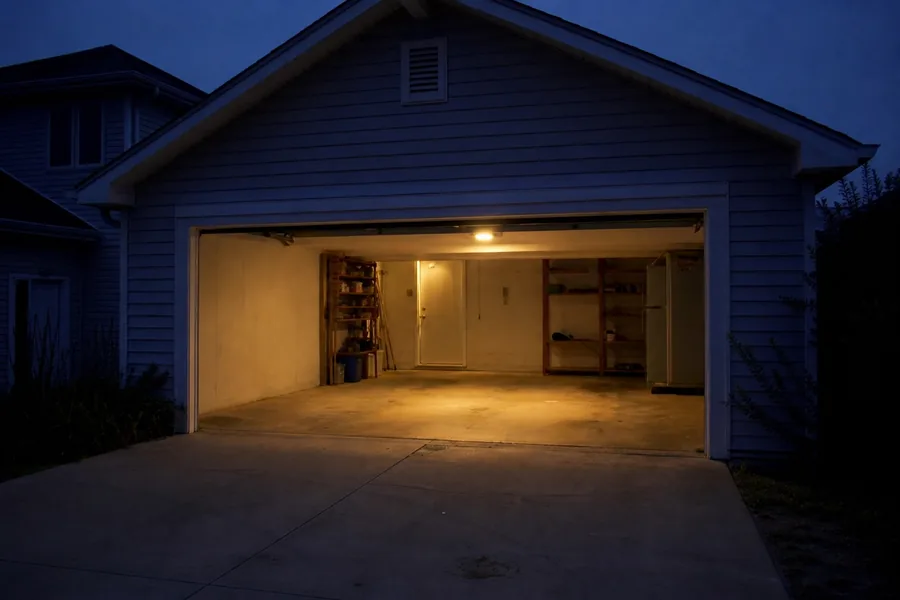
In summer, an uninsulated steel door in the afternoon sun turns the garage into an oven, and that heat reaches the rooms beside it. An insulated door with tight seals keeps the garage noticeably cooler and cuts down the humidity that rusts springs, cables and tools.
The seals matter as much as the insulation: side, top and bottom seals close the gaps where hot, damp air and insects get in.
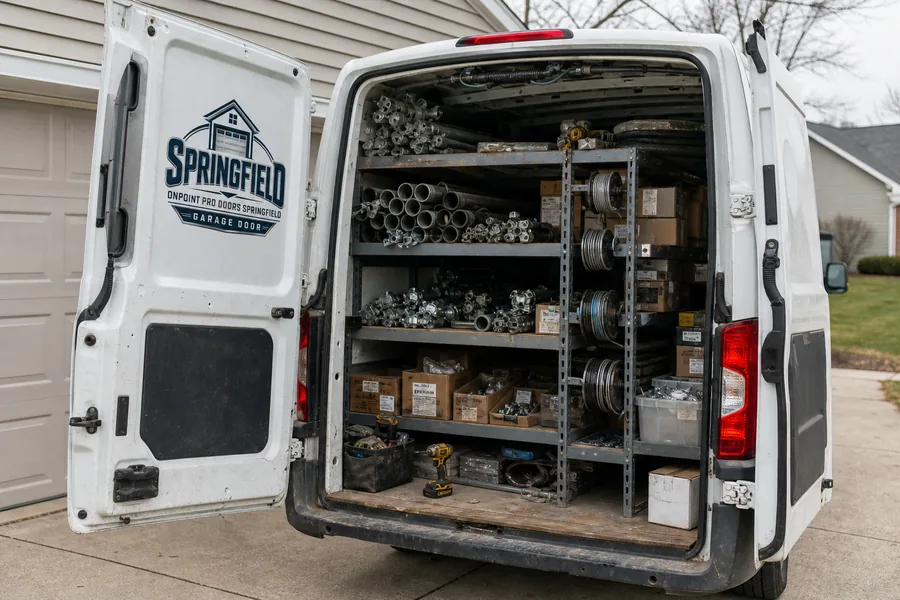
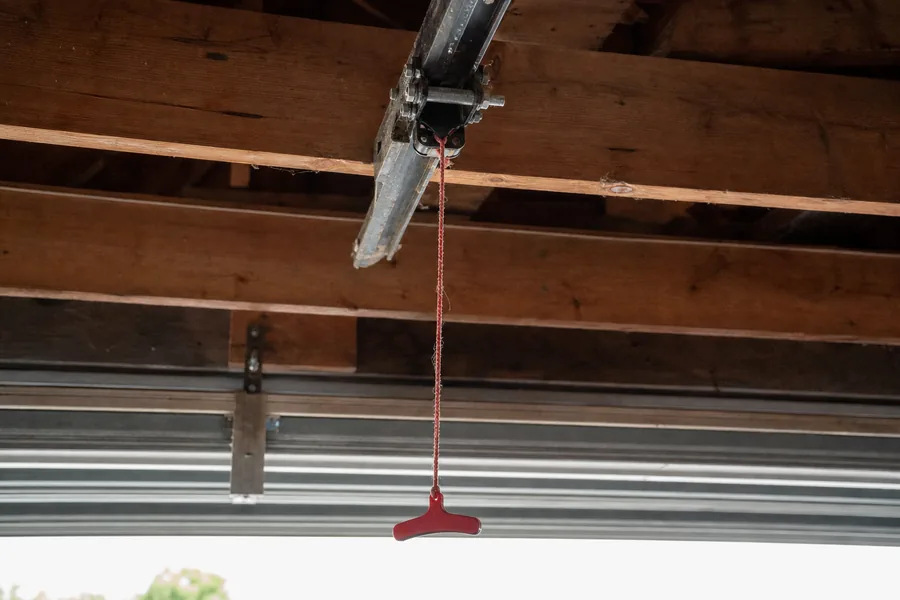
One visit for most doors, once the door has arrived.
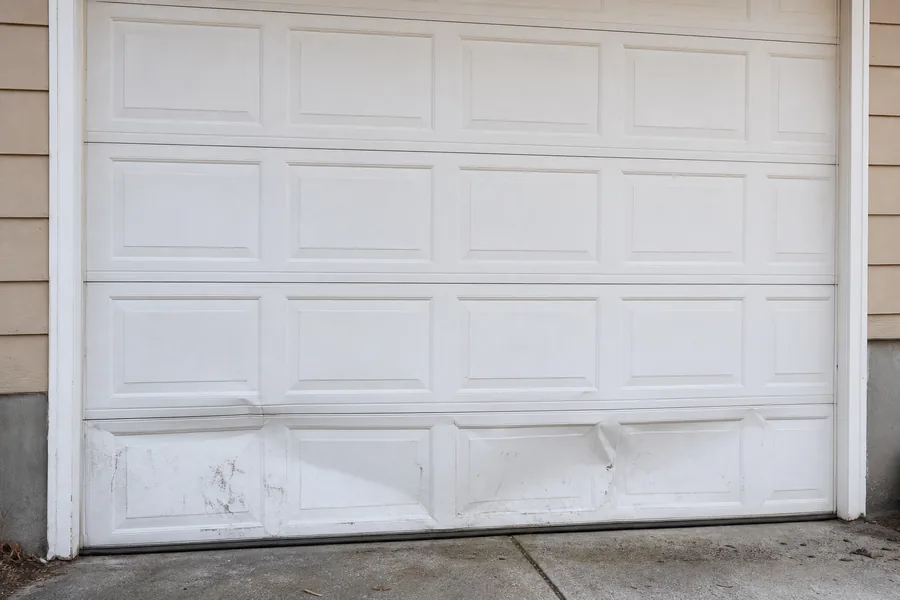
Spring hail dents thin steel doors easily, and a dented section is more than a looks problem: a deep dent near a hinge can bend the section enough to make the door bind. Doors with a thicker steel skin, or with an insulated core bonded behind the steel, resist dents far better than single-layer doors, and wood-grain finishes hide small dings that would show on smooth white steel.
After a hailstorm, the estimate lists every section that is creased or cracked, so you can see what actually needs replacing and what does not.
The detached garages behind the bungalows in the older neighborhoods often have openings that aren't a standard size, and some have too little headroom for a regular track. The opening is measured at several points and the framing checked, because the door can't hang any straighter than the jambs holding it.
Where the framing needs work, that comes first, written up on its own. Where the opening is an odd size, the door is ordered to it, and you hear the lead time before committing.
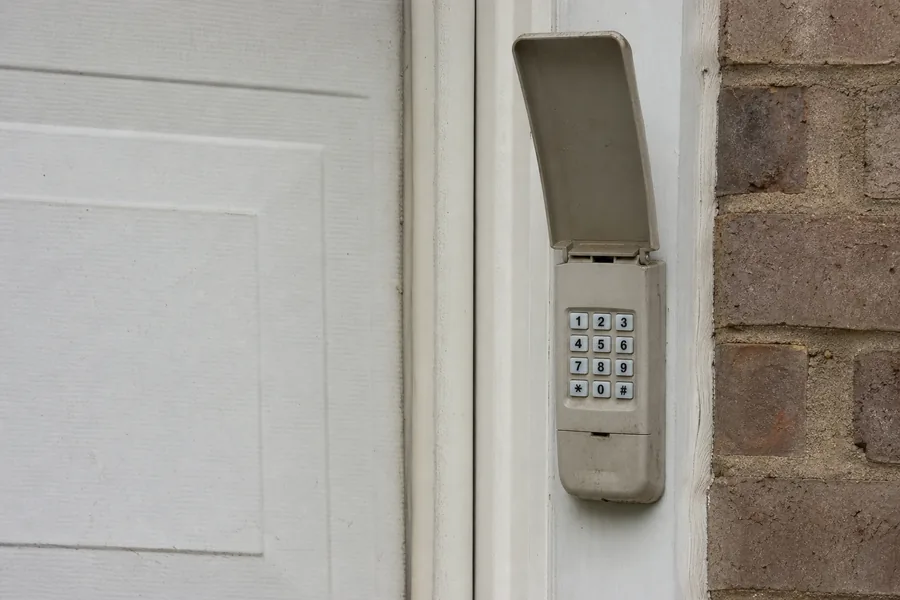
Outdoor keypads take a beating from the humidity here, and a new door is the natural time to swap a faded keypad for a sealed one. If the opener is old, a replacement, with rolling-code remotes and a backup battery, gets its own line on the estimate.
If the opener stays, it's adjusted for the new door's weight, and the reverse is tested before we leave.
A new door on a shop or pole barn starts with what goes through it: a pickup, a tractor with a loader, a camper. The width and height are sized for that, the track is anchored to posts that can take the load, and the springs are rated for how often the door runs. Insulation matters if the shop is heated or used as a workspace.
Those doors are measured on site like any other, and the options are written up side by side.
Brick ranches across Southern Hills, Brentwood and Galloway, bungalow garages near Rountree, Phelps Grove and Doling, and homes, shops and outbuildings in Nixa, Ozark, Republic, Battlefield, Strafford and Willard.
Shop and outbuilding doors, including larger sectional doors, are part of the work.
Wind rating. Worth it on doors facing open ground.
Insulation. For comfort, and to keep the humidity down.
Windows. Light for a garage people work in.
Color. Darker shades hide red clay dust and road grime.
Hardware. Galvanized springs and sealed rollers stand up to the humidity longer.
Yes. Wind-rated doors and reinforcement options are laid out at the estimate, with what each one does.
For most attached garages, yes: cooler in summer, warmer in winter, and less humidity inside.
Yes. The opening and framing are checked first, and the door is ordered to the opening if it's an odd size.
Only during the install itself, which is one visit for most doors.
Yes, sectional doors for shops and outbuildings as well as homes.
Often. Whether it can lift the new door comfortably is judged at the estimate.
Yes. Springs are sized to the weight of the new door, so they come with it rather than being reused.
Yes, in several layouts. Frosted glass lets light into the garage without showing what's inside.
Most steel doors come in several browns, tans and darker shades that sit well against brick, and the color chart comes to the estimate.
It's taken down and leaves with us.
Yes; the garage is measured and everything is written down before anything is ordered.
Set up the measuring visit on the phone or through the form, and pick a time that suits you.
Free estimate for homes, shops and outbuildings.
Describe the fault and we'll give you an honest arrival time. The visit and the estimate is free, anywhere in Greene County.
Easier to explain by phone? Call (417) 216-7189.
Tell us what the door is doing. Nothing begins until you've heard the number, and hearing it is free.