A broken spring stops a door the same way whatever kind it is, but the repair isn't the same for every door. An open coil above the door is one job; a Wayne Dalton door with its springs sealed inside a tube is another. Tell us what you see, keep the opener off, and the right parts come along. The estimate is free.
Tell us what the door is doing. Nothing begins until you've heard the number, and hearing it is free.
Most doors carry their torsion springs out in the open on a steel bar above the opening; when one breaks, the gap in the coil is plain to see. A lot of doors in the subdivisions built in the nineties and 2000s are Wayne Dalton models with a TorqueMaster system instead: the springs sit inside the tube that runs across the top of the door, with a gear housing at each end. When one of those breaks, nothing looks wrong from below, yet the opener suddenly can't manage the weight and the door may sit crooked in the opening.
The two systems take different parts and a different procedure, and a TorqueMaster door can be converted to standard open torsion springs when that makes more sense than staying with the sealed system. The technician tells you which you have and what each option means before anything comes apart.
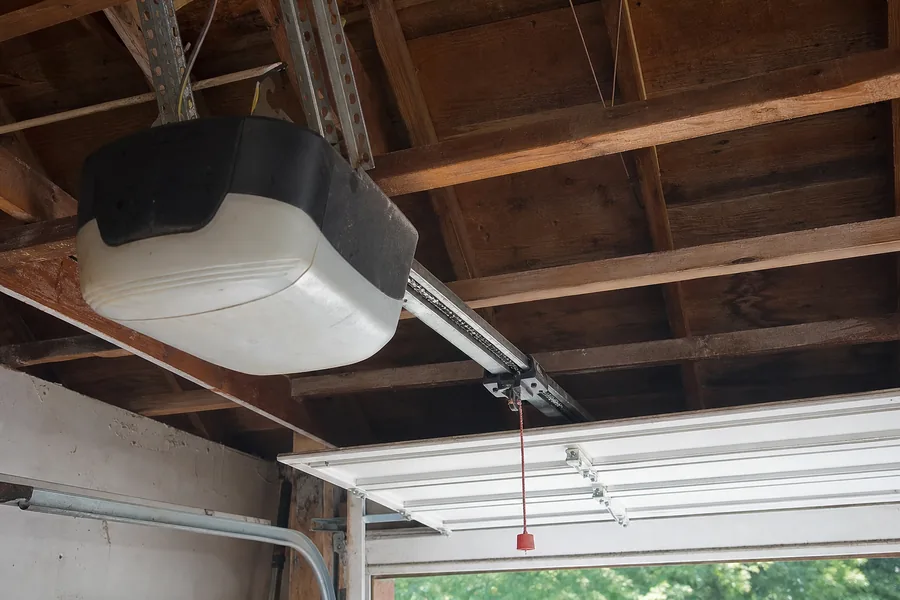
Summers here are humid, and a closed garage holds that moisture against bare steel. Springs rust along the coils, and the rust roughens the surfaces that rub together, adding friction every cycle and starting the small surface cracks a spring eventually fails from. A spring that's rusty from end to end is living on borrowed time even while the door still runs.
Fresh springs get a thin film of spring lubricant, and so do the rollers and hinges, which slows that down. It's part of every spring visit, along with a look at the cables where they meet the bottom brackets, the spot where rust usually shows up first.
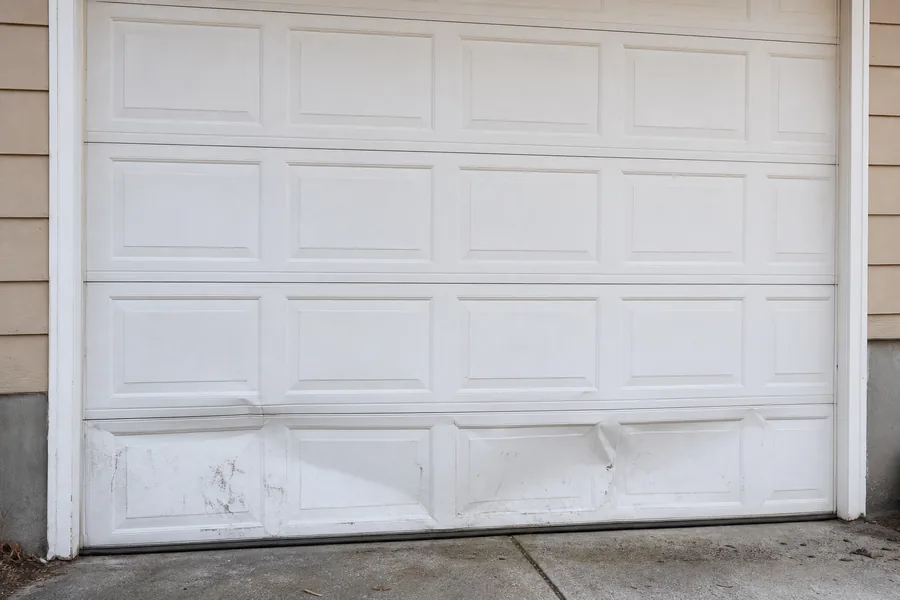
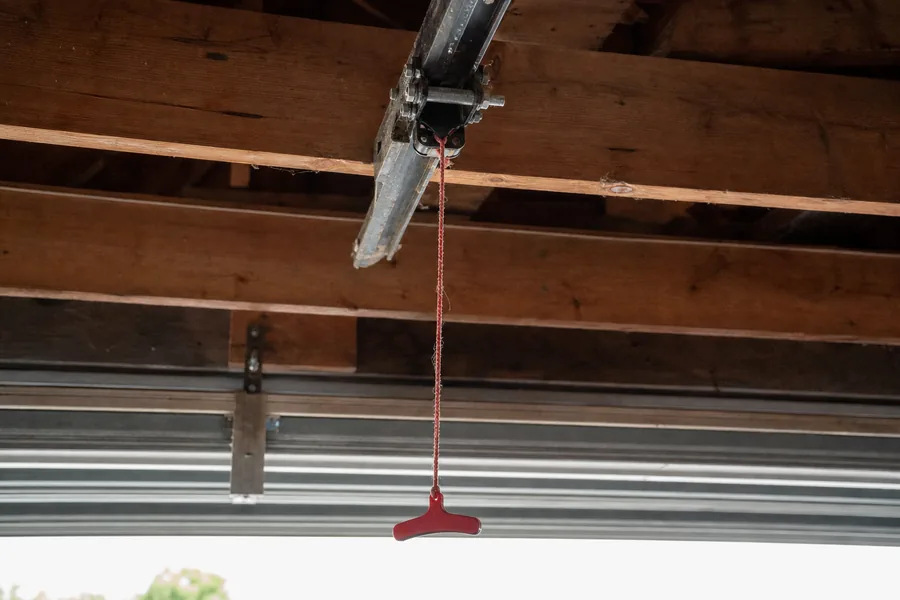
Near the center of town, older bungalows often have a detached garage at the back of the lot, sometimes with a single wood door on extension springs, sometimes with a door that was upgraded to steel along the way and never had its springs resized. Those doors get weighed carefully, because a door that's heavier than its springs breaks springs early and wears out the opener.
Across the south and east sides, the brick ranches mostly have attached garages with a double-wide steel door on two torsion springs. On those, both springs are replaced together, the cables get a close look, and the balance is set by hand before the opener runs again.
The steps don't change with the kind of spring.
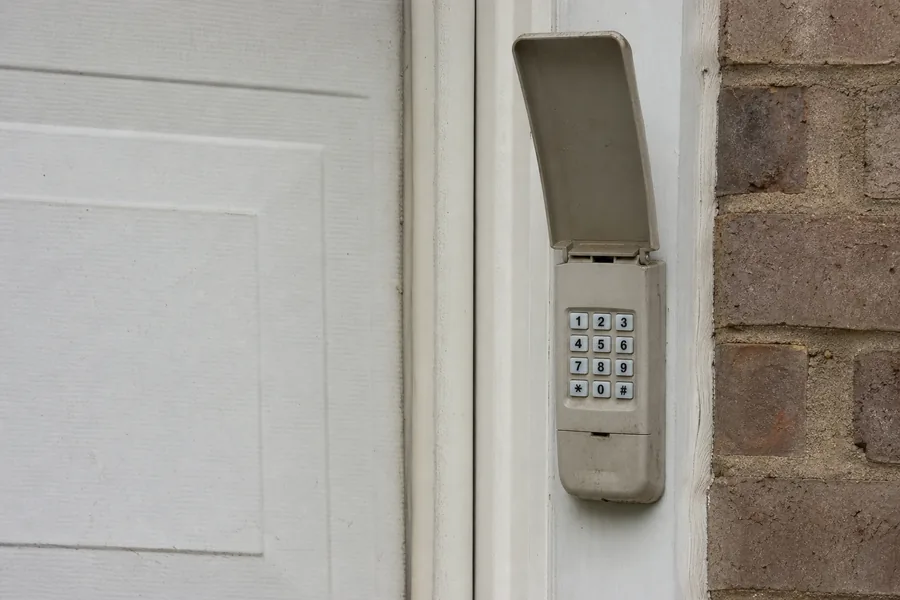
When freezing rain glazes the driveway, it glazes the bottom of the door and the seal too. An opener that pulls on a door frozen down puts the whole strain on the cables and springs at once, and that's when a worn spring lets go or a cable jumps off its drum. If the door won't budge on an icy morning, leave the button alone and let it thaw, or call.
After an ice storm, a spring visit includes a look at both cables and drums, because a cable that was yanked hard once tends to give out the next time.
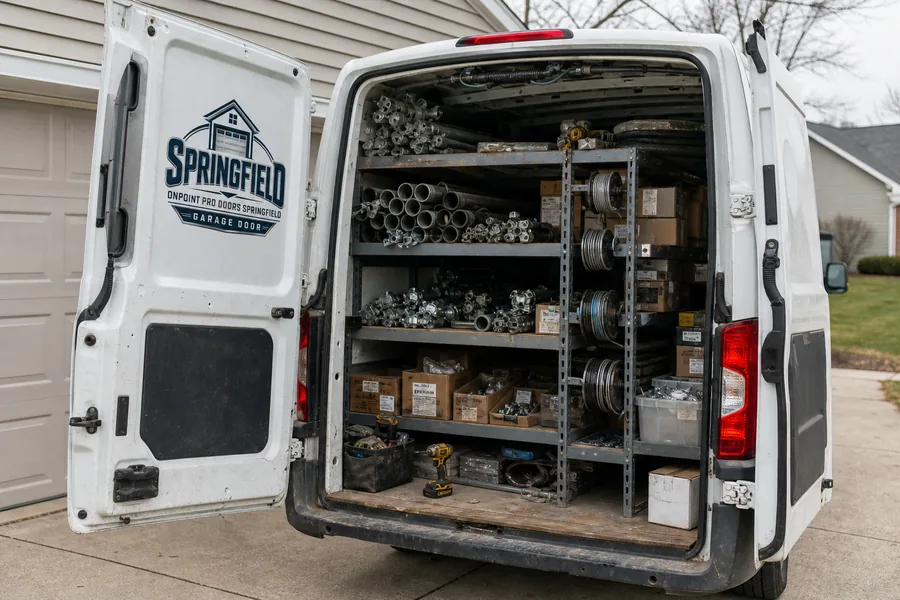
Rountree, Phelps Grove, Galloway, Brentwood, Southern Hills and Doling, and out to Nixa, Ozark, Republic, Battlefield, Strafford and Willard. Standard springs, cables and rollers ride along on every call.
Tell us your street and you get a real window.
We tell you which system you have. Open torsion, sealed tube, or extension.
Both springs, every time. On any two-spring door.
Heavier doors get stronger springs. Matched to today's door weight, not the original.
Nothing starts before your OK. The written estimate comes first.
Look up at the top of the closed door from inside the garage. A bare coil or two on a bar means open torsion springs. A plain round tube across the top with a housing at each end usually means a sealed-tube system. Long springs running parallel to the overhead tracks on each side are extension springs. Tell us which it looks like when you call, and if you can't tell, that's fine too; the technician identifies it in the first minute of the visit.
If there's no visible coil over the door, just a round tube across the top with a housing at each end, it's likely a sealed-tube system. The technician confirms it on the visit.
Yes. Converting to standard open torsion springs is common and makes future repairs simpler. You hear both options first.
Rust shortens their life. If the door still balances, lubrication buys time; if it's heavy, replacing the pair on your schedule beats waiting for the break.
One side lost its lift, usually a spring or a cable. Keep the opener off and call; running a crooked door can bend the track.
Yes, the nearby towns are on the same schedule.
It is. You get it in writing before any work begins.
One call or the form gets you on the schedule: describe what the door's up to and roughly where you are. You'll have a two-hour window and a ring from the technician before arrival.
Free estimates, in town or out in the county.
Describe the fault and we'll give you an honest arrival time. The visit and the estimate is free, anywhere in Greene County.
Easier to explain by phone? Call (417) 216-7189.
Tell us what the door is doing. Nothing begins until you've heard the number, and hearing it is free.