When the old opener finally gives up, somebody asks belt or chain, and you're expected to know. Here's the short version: what each kind is like to live with, which garages around town suit which, and why we look at your door first.
Tell us what the door is doing. Nothing begins until you've heard the number, and hearing it is free.
Every opener tugs a carriage down a rail, and the carriage tugs your door. The difference is what links motor to carriage: a steel chain, a reinforced belt, or on some units a long threaded screw. The wall-mount kind sits beside the door and spins the spring shaft, with no rail at all.
Screw drives had a run in the nineties and still turn up in some local garages, though a cold snap makes them sluggish and they have mostly fallen out of favor.
Drive through Rountree or Phelps Grove and you'll hear plenty of chain drives on detached garages. In the nineties subdivisions and newer, especially wherever there's a bonus room over the garage, belts have become the usual pick.
Lots of those nineties houses also have Wayne Dalton doors with TorqueMaster springs sealed inside a tube, which changes which openers pair well with them. We sort that out at the door before recommending anything.
Rule of thumb: if anyone sleeps, works or watches TV over or beside the garage, go belt. For a detached garage or a shop out back, a chain drive still earns its keep.
Consider a wall-mount if you've got a car lift, a ceiling full of storage or a tall door, as long as the door has torsion springs above it.
Shops and pole buildings out on acreage often have taller, heavier doors than the house garage. Those get sized on their own, sometimes with a heavier-duty operator, and we explain why on the spot.
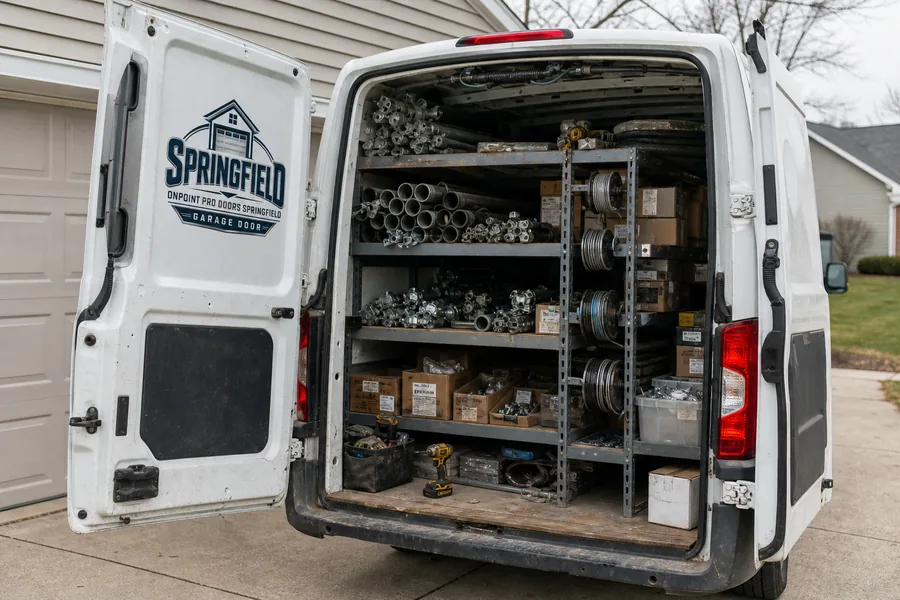
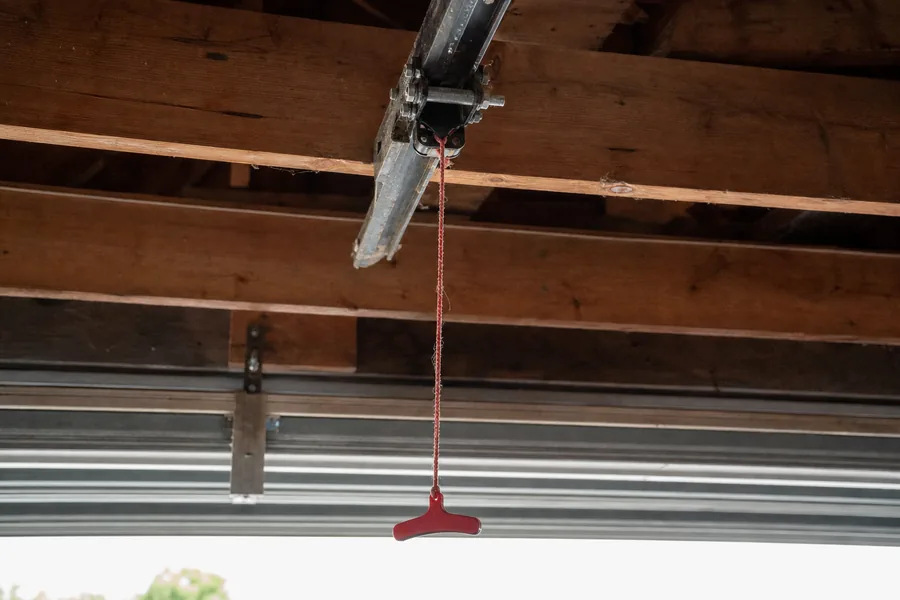
Here's the order, every time, whatever brand ends up on the ceiling.
Most new LiftMaster, Chamberlain and Genie openers have Wi-Fi built in. Your phone shows whether the door's up, alerts you when it moves, and can close it from wherever you are.
For busy households, the app's history of who opened the door and when ends up being the feature people check most.
Battery backup is the extra we'd pick first. Thunderstorms and ice both knock the power out right when you need the truck, and a backup keeps the door working for a good number of trips.
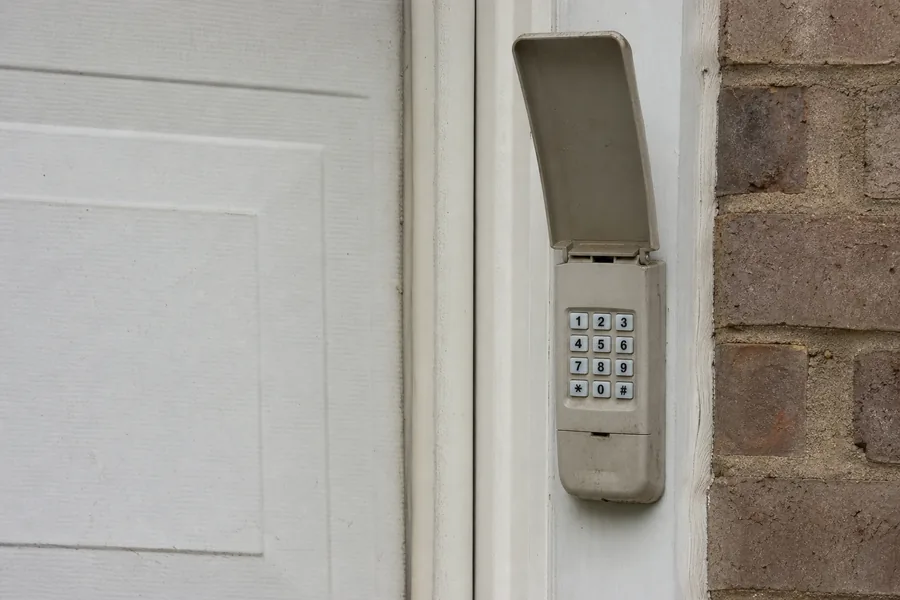
Other options folks ask about: an outdoor keypad, a lighted wall control, and a timer that closes a door someone forgot. None of them is required.
If your household has someone who can't wrestle a heavy door by hand, backup moves from nice-to-have to essential, and we'll say so.
Genie's Signature Series belts are quiet and popular. LiftMaster's belt models add Wi-Fi and optional cameras. Chamberlain makes simpler models in the same family. We install all three.
If your garage already runs other Wi-Fi gear, like cameras or a smart lock, it can be worth staying in one family so everything shows up in one app. We'll talk it through at the door.
Horsepower is a rough guide. A balanced single door runs for years on a modest motor; heavier insulated doubles and tall doors do better with more. Balance counts for more than the sticker.
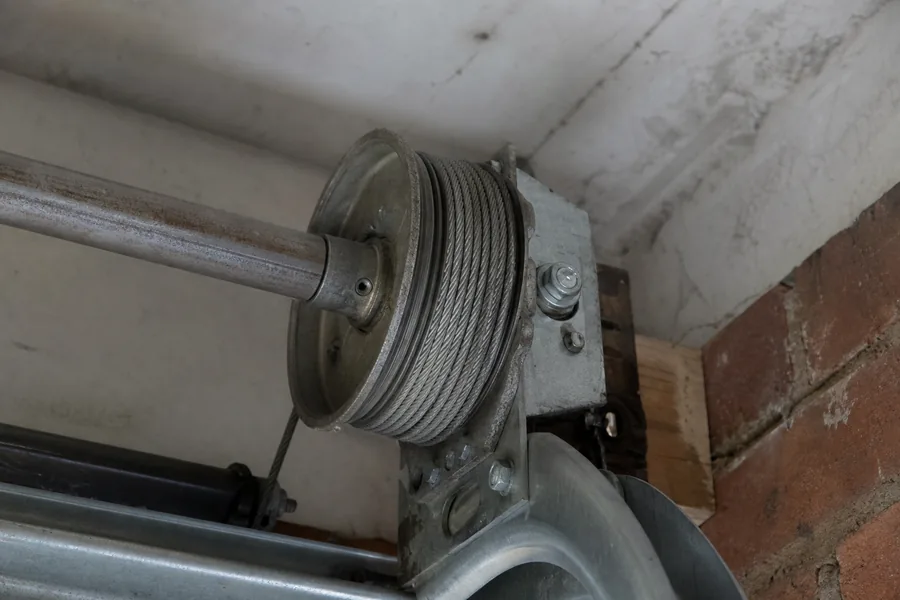
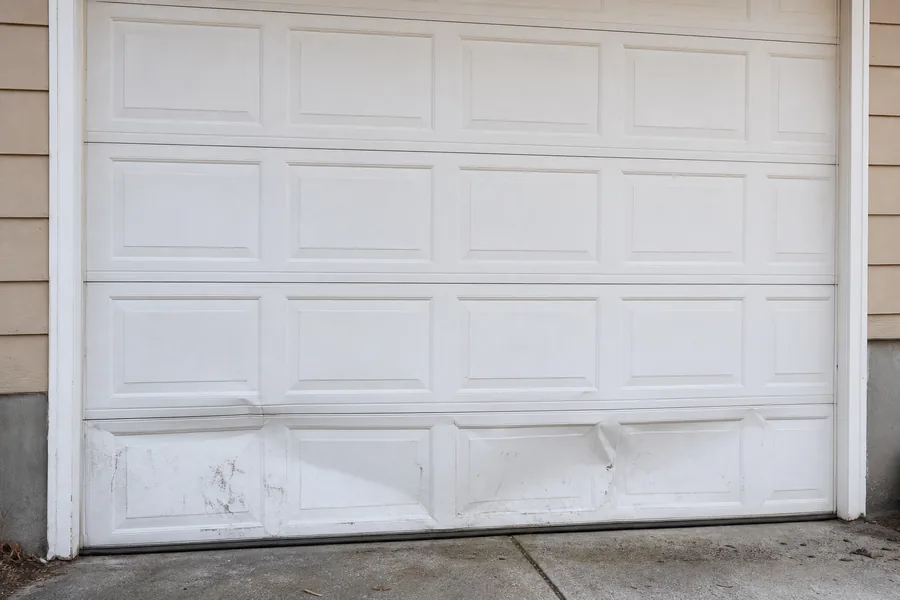
Your opener just relays the message. When it grinds, stalls or reverses, the real trouble is often a spring past its prime, a cable unraveling at the drum or rollers binding in the track. Fix that and the old opener may have plenty of life left.
Swap in a new opener without checking the door and the new one wears out early for the same reason. So we always start with springs, cables and rollers.
When the door checks out and your opener really is done, you'll see the choices side by side, belt or chain, rail or wall, backup or not, and you decide.
Your estimate is free. We tell you what the door needs and what a new opener would mean, and nothing happens until you say so. If the springs turn out to be the real problem, that shows up as its own line so you can decide on each separately.
"Belts can't handle heavy doors." Modern belts are laced with steel and rated for doubles and insulated doors.
"A bigger motor will fix it." A struggling opener means an unbalanced door. More horsepower just strains longer.
"Smart openers mean a monthly bill." The standard apps are free. Paid tiers only add frills like saved video.
"Anybody can hang an opener." Bolting it up is easy. Dialing in travel, force and the safety reverse on a balanced door is where the skill is.
Yes, and you'll notice it most in a bonus room or bedroom over the garage, where a chain drive announces every trip through the floor. Neighbors on shared walls tend to notice the difference too.
Nearly always, provided the door is balanced and moves freely. Springs, cables and rollers get checked first, since an opener is only as good as the door it pulls.
A few hours, from taking the old unit down to pairing the last vehicle and proving the reverse, and we haul the old opener away. If the springs need work first, that happens on the same visit.
Maybe, if there's no room overhead for a rail, say a car lift or a ceiling full of storage. The door also needs torsion springs above the opening. We'll tell you at the door whether yours qualifies.
Yes. We tell you what the door needs and which opener fits before you commit to anything. Every option is its own line, so the choice stays yours.
Most days, and an opener that's quit with your truck inside gets treated as urgent. We can release the door by hand first so you're not stuck. Call early and say so.
Call from Galloway, Brentwood, Ozark or Battlefield and tell us about the door. We'll give you a couple of hours to be home and ring when we're on the way, so the day isn't lost waiting.
Free estimate. Throughout Greene County, including Rountree, Phelps Grove, Galloway, Nixa, Ozark, Republic, Battlefield, Strafford, Willard.
Name, number and a line about your door will do. The visit and the estimate are both free.
Easier to explain by phone? Call (417) 216-7189.
Tell us what the door is doing. Nothing begins until you've heard the number, and hearing it is free.